
Writing about Other People
And a little bit on what I love about Liz Robbins and Lauren Marie Schmidt's poetry

I’ve been thinking a lot about the ways we roll people and their complicated lives into our writing. In my academic research work, I do qualitative and ethnographic research, which allows for lots of conversations with students or people whose experiences I want my readers to understand in a different way. In order to do that work, I have to jump through a lot of hoops with institutional review boards so that my bosses can say that they’re doing what they can to keep researchers from doing unethical things. Honestly, a lot of the process is total bullshit. Once, I spent about 40 hours putting together all the materials for a project working with my former high school students and the review board accepted it 36 minutes later. It’s institutional box checking at its most . . . institutional.
But the process has led me to think a lot about the ways we represent other people, which is . . . y’know . . . pretty ethically useful.
I’m working on my first chapbook of poetry right now, tentatively titled Your Neighbor as Yourself, and a lot of it deals with my relationship with a homeless neighbor who died a couple years ago. Our friendship was complicated. We learned a lot from each other. The fact that I wrote poetry at all, let alone poetry about him, was completely bizarre in his opinion. But not necessarily in a bad way.
You can see why I want to proceed with caution though.
So I’ve been keeping an eye out for writing that can help me think about how poets write about other people, especially people who are in precarious situations.
That’s where my head was when Liz Robbins’ Backlit came in the mail. In it, Robbins presents 24 poems drawing on her interview work with female sex workers in Florida.
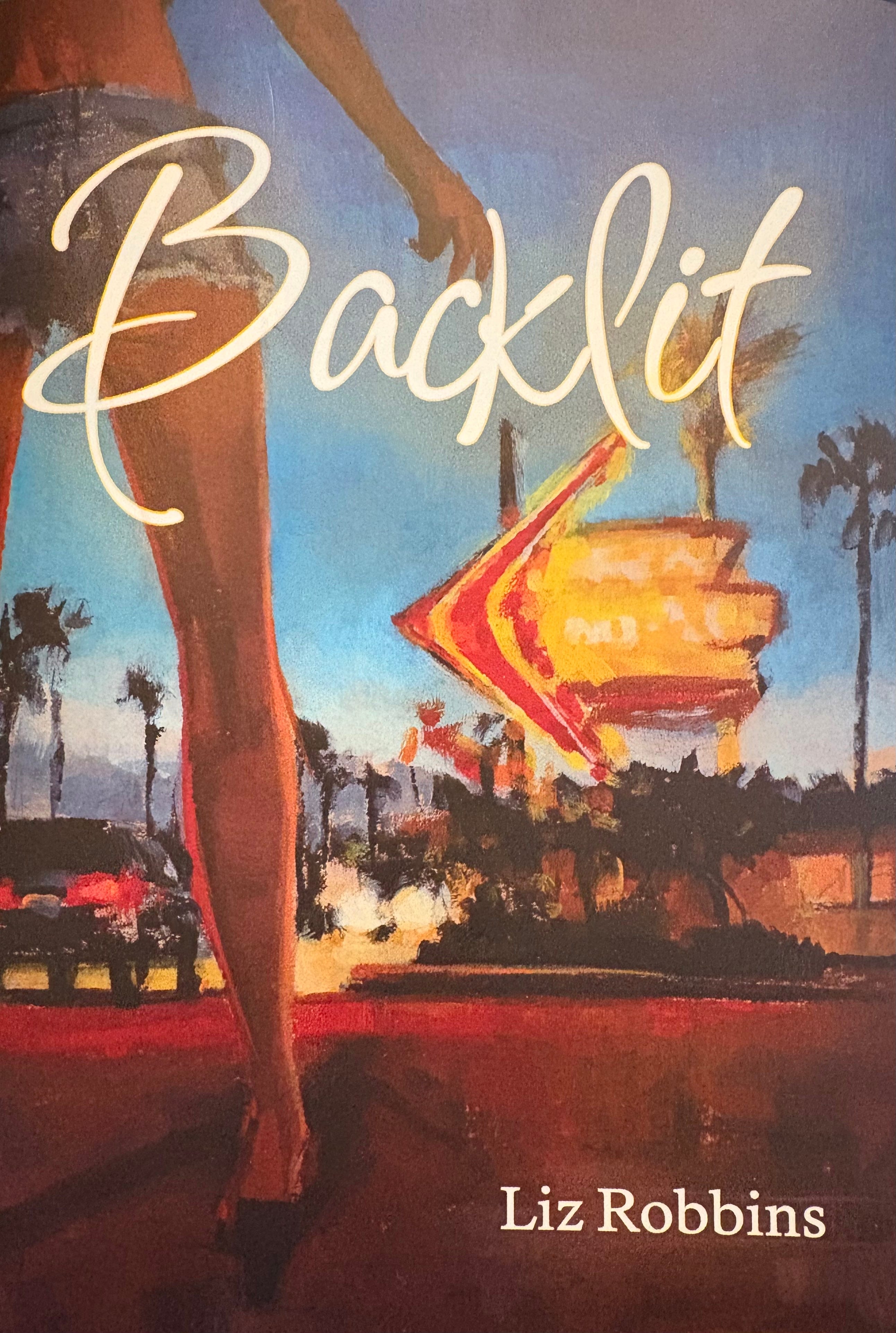
Each piece dips into a very damp and human kind of darkness, like one big seat next to a motel window on a rainy Sunday, looking out on the world while waiting to go back to work. Robbins certainly does the work that this kind of project begs for: she humanizes and sympathizes without being patronizing. She’s honest about the choices that bring women into this life and the complicated realities that keep them there.
But even more importantly, she gives us some insights into moments of strength, which we can only take as hope, or – at best – a sign that human dignity can persevere.
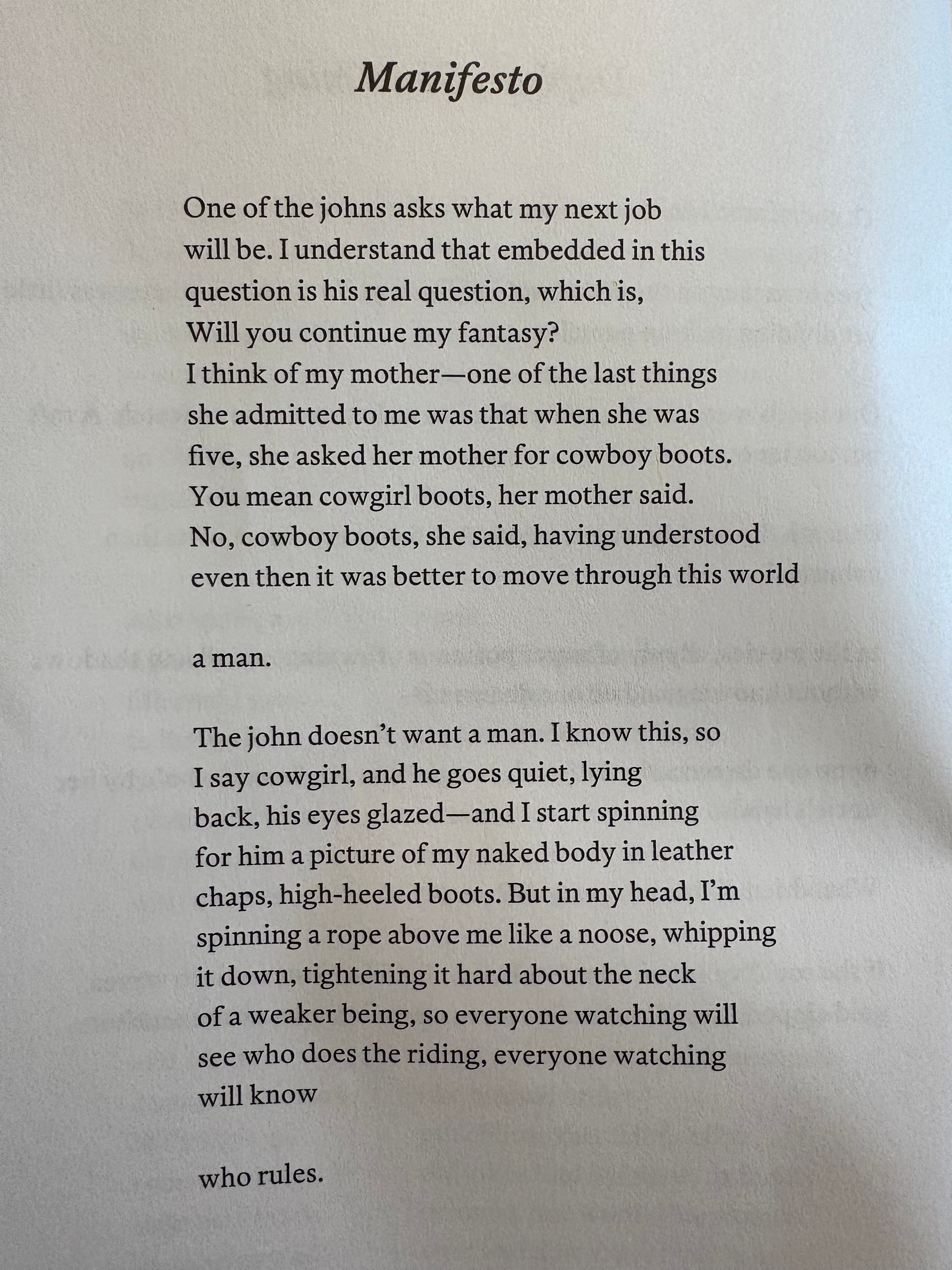
We don’t need to pity this woman. She doesn’t need us to do anything. But we can learn something from her. That’s a turn away from the Pretty Woman-style hero stories or the hopeless-romantic whore stories like Leaving Las Vegas.
Still, there’s something that is unsettling me about the collection. It’s devastatingly revealing. Don’t get me wrong. I would be lucky to produce a collection that’s 80% as good as what Robbins has put together.
But it feels like a window onto a world. It provides us a clear view, while keeping a very solid barrier between us. We don’t have to feel the wind and the rain. As a writer, it makes me uncomfortable to keep that kind of divide up because, if we do, we don’t have to really be honest about our relationship (or lack of relationship) with the characters on the page or the people they represent in real life.
I think about the difference between Robbins’ depiction of the sex workers she interviewed and Lauren Marie Schmidt’s absolutely stunning poems about the women she taught at the Haven House for Homeless Women and Children, which appear in the first part of her book Filthy Labors.
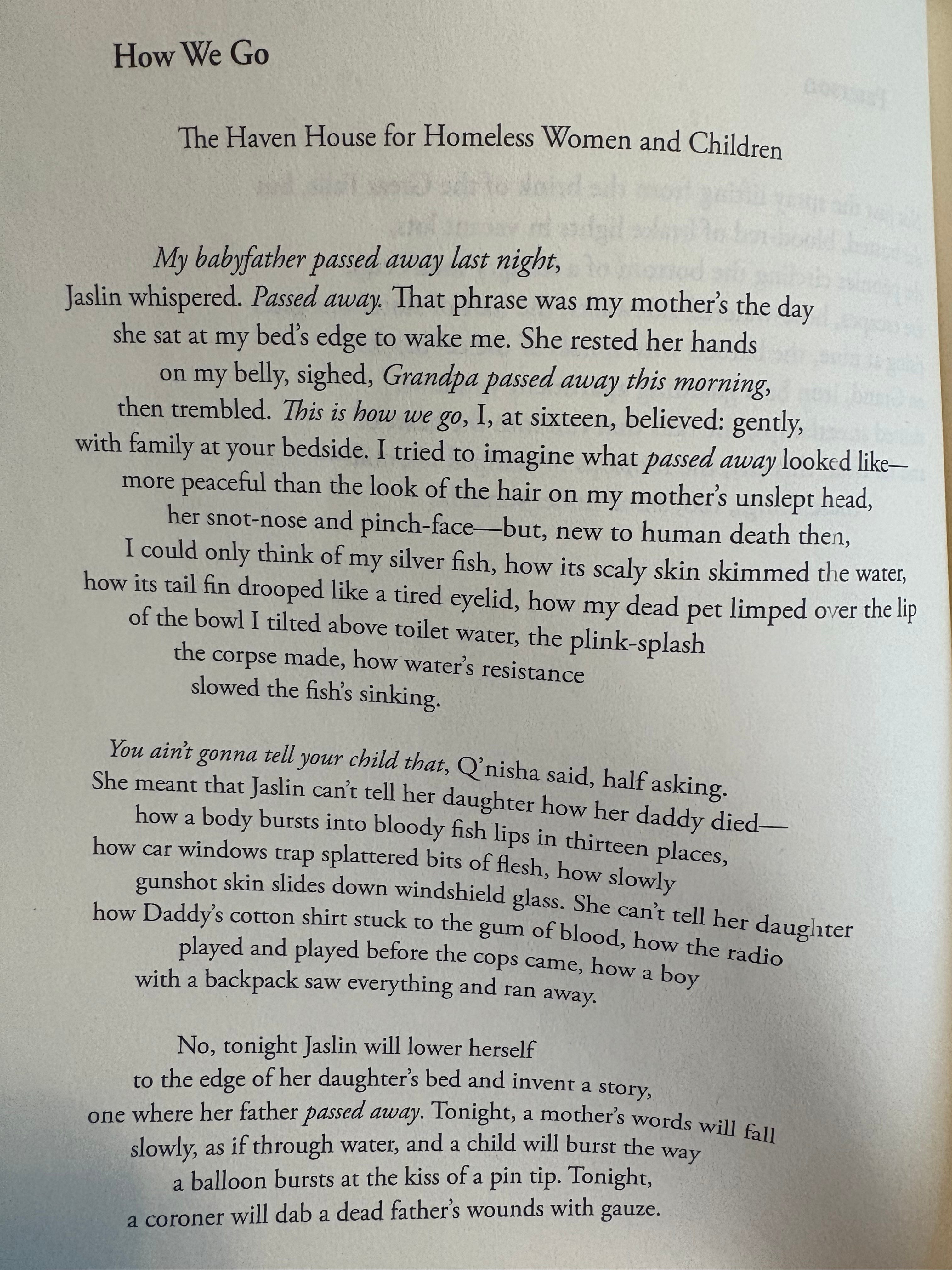
The obvious difference is that Schmidt appears in the poems. She’s hearing what these women have to say because she’s in the room, then she’s in her own head, then she’s back in the room with the women and the power of poetry is that we get to see her understanding (and our own) develop in real-time. We get to think about what these relationships mean.
And Schmidt gets to be honest about the stakes of her position as a writer who comes in, teaches, talks to the women, is a momentary part of their lives, then heads home.
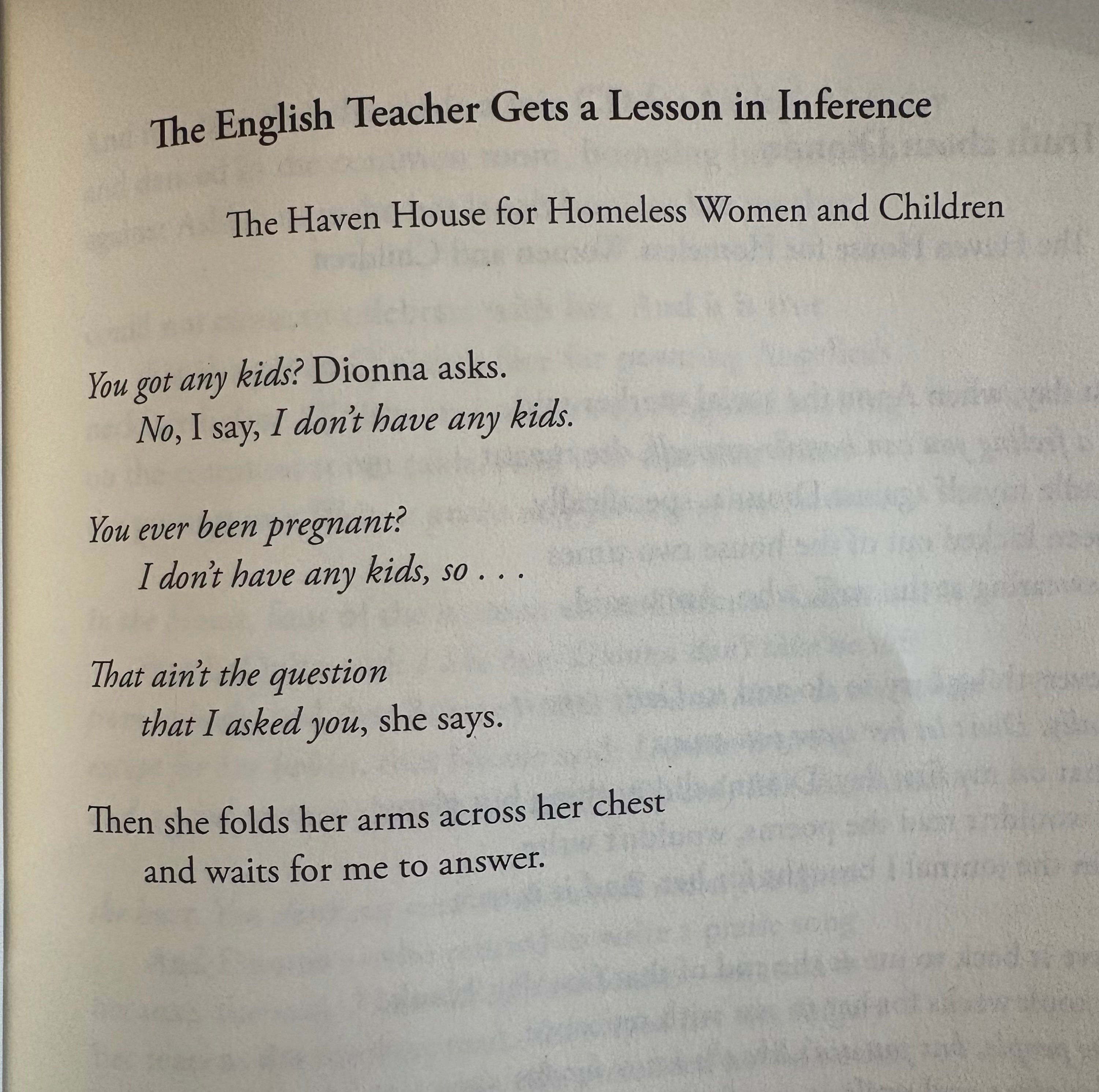
What we learn isn’t just that women like Dionna exist and that they carry a fierceness that would tear any sympathy to pieces on first sight; we learn that we live in the world with them and that that co-existence has consequences of its own. Schmidt’s book strikes me as the most starkly-perfect use of poetry to show the complex mesh of the writing, the writer, and the world at large.
I’m not making evaluations of quality here. I love both of these collections. That’s not the point. But holding them up for comparison really helps me to put a finger on what I hope the poems I’m putting together can pull off. It’s something about an un-patronizing honesty and something about an awareness of my own feet standing in the world with the people I’m writing about.
Looking back at one that Kevin Stein at Hamilton Stone Review published earlier this year, I definitely haven’t ascended to the level of Robbins or Schmidt, but I think that at least some of my concerns with representing people are heading in ok directions.
A Tax on the Poor and Stupid
When I opened my hood
to find four dried turdlets
on my engine block, I knew
a smallish thing survived
the night sleeping huddled
against the dissipating heat
of yesterday’s hard drive.
I topped off the leaking oil.
Every cold glug was a prayer
for my neighbor who slept under
icy clouds of breath behind every
job site he worked, in every empty
conversion van stalled out
on the dead-end off the block.
After coughing for a season, his snore
erupted into a hemorrhage
they found him frozen to
after the long holiday weekend.
Like my brother, he used to mock me
for every lotto ticket I’d pick
up when the billionth place
lit up on the blood red sign
over the liquor store he’d hustle
empties to for a few bucks.
If I had all that money, I’d make it
so you’d stop keeping me up
at night, dying on the streets,
I’d say. I’m drowning
like every penny plopped
in the library fountain, partner,
he’d reply. Wishes float
heads-down and rest right
where I can’t quite reach
unless I’m willing to wet
my sleeve. Why’d I ever argue
with a man who needed to drip
through early December, snatching
up handfuls of derelict dreams,
barely enough to buy a burger?
And now what kind of heat
will my two balled up bills put off?
When I give in and light them on fire
instead, will the glow of matter turning
back to energy do to this dark world
what my foolish hopes never could?
I’m there. It’s our relationship that’s on the table, and there’s a lot that we get to learn. My neighbor’s strength is there, outshining mine by a mile. It’s not just a eulogy or a lament for the existence of homelessness, but it does that too.
Still, I can’t help thinking that it needs to do more, like it’s the poetic equivalent of Oskar Schindler wondering if it could’ve sold a watch and rescued one more person from the concentration camps.
And that’s where I’m back around full-circle, learning from both Robbins and Schmidt. The writer as hero temptation can be so slick. Even when you’re keeping both eyes on it, more leaks onto your shoes.
I guess I’ve got more work to do.
Thanks so very much for this thoughtful review, Ryan.